
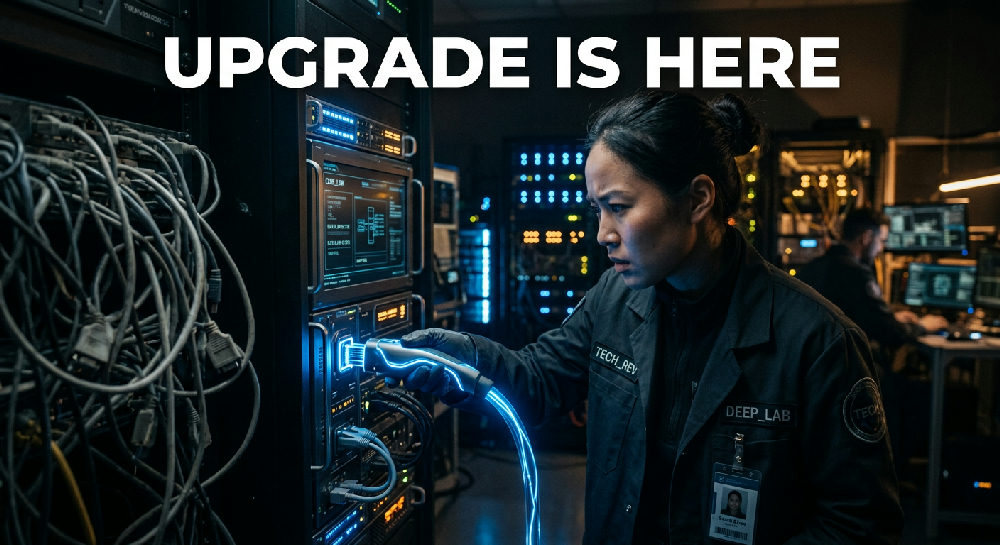
For decades, software integration relied on rigid, point-to-point connections. If a system needed data, developers built a custom bridge to fetch it. Today, artificial intelligence requires a fundamentally different architecture to function autonomously. The transition from custom adapters to a universal standard is precisely what defines the modern MCP vs API debate. The current technological landscape resembles the early days of consumer electronics, where every device required a proprietary charger. Model Context Protocol acts as the universal standard—the USB-C for artificial intelligence. It replaces fragile, hardcoded pipelines with dynamic, context-aware connections, allowing enterprises to architect systems built for seamless execution rather than constant maintenance.
MCP vs API: Solving the N×M Integration Nightmare
The fundamental difference between these architectures lies in scalability and technical debt. Traditional application programming interfaces function on an N×M integration model. If an organization operates five different artificial intelligence models and relies on twenty distinct data sources—ranging from customer relationship management platforms to internal wikis—connecting them requires one hundred distinct integrations. Every time a new database or language model enters the enterprise stack, developers must write, test, and maintain custom code. This N×M problem creates a brittle infrastructure where maintenance demands constantly outpace engineering innovation.
The Mathematics of the Universal Hub
By implementing a standardized protocol, organizations shift their infrastructure from O(N*M) complexity to an O(N+M) model. Instead of building direct, hardcoded bridges between every single tool and model, systems connect to standardized MCP Servers. These servers act as a universal hub. When a new proprietary data source is added to the network, it connects exactly once to the protocol. It instantly becomes securely accessible to any connected model. Ten models and twenty data sources no longer require two hundred custom endpoints; they require exactly thirty connections. This mathematical reduction in friction eliminates operational bottlenecks, transforming data accessibility into a systemic multiplier.
The API for AI
Traditional endpoints were designed for predictable software-to-software communication. They were never built to handle the contextual demands of autonomous agents. The protocol solves this by standardizing how language models discover and consume context, effectively operating as The API for AI. It provides a consistent framework for exposing resources, tools, and prompts, ensuring that intelligent systems can interact safely and predictably with local and remote environments without requiring constant human intervention.
Vending Machine vs. Personal Chef: A Functional Comparison
To understand the functional divergence between traditional endpoints and context-aware protocols, consider the operational difference between a vending machine and a personal chef.
Traditional integrations represent the vending machine. A requesting application inputs an exact, predetermined sequence of codes—the endpoint URL, headers, and payload—and the machine dispenses a highly specific, unchanging JSON response. If the request deviates by a single character or if the underlying schema changes, the machine fails completely. It requires absolute predictability, rigid parameters, and manual orchestration from developers. The system possesses zero awareness of the broader context or the user's ultimate goal.
Conversely, the modern protocol functions as the personal chef. When tasked with executing a complex operation, the chef assesses the available ingredients across the kitchen by querying exposed tools, understands strict dietary boundaries through built-in security constraints, and dynamically combines elements to produce a tailored result. Rather than relying on rigid, hardcoded requests, the protocol allows intelligent agents to discover what resources are available in real-time. The system understands how to format the data and executes complex operational sequences autonomously.
Architecting the Post-API Enterprise Infrastructure
For scaling agencies and enterprise organizations, a permanent competitive moat no longer stems from simply possessing artificial intelligence models. The true differentiator lies entirely in the underlying infrastructure. Relying purely on legacy connections to feed data into modern models forces systems into isolated silos, treating advanced intelligence as a simple software function rather than an autonomous engine.
Transitioning to MCP Servers allows organizations to claim proprietary ownership over their operational capabilities. High-speed engineering principles dictate that infrastructure must dynamically adapt to business requirements. By adopting a universal standard for context injection, companies achieve true strategic autonomy. Systems can dynamically read secure files, query localized databases, and interface with external platforms without requiring engineers to hardcode every nuanced interaction.
Execution Over Manual Friction
The migration away from hardcoded integrations represents a critical shift toward execution over hype. While legacy connections remain necessary for specific, deterministic data transfers between standard software applications, they fail when applied to the dynamic, context-heavy requirements of autonomous agents. Standardizing how systems understand their surrounding environments ensures secure, isolated, and infinitely scalable data access. This architectural superiority allows businesses to replace manual friction with automated, intelligent workflows.
The technological progression from isolated, rigid endpoints to unified, discoverable protocols marks the definitive end of hardcoded fragility in system architecture. As organizations evaluate MCP vs API for their infrastructure, the strategic focus must remain on long-term scalability, proprietary ownership, and autonomous execution. Building a universal hub for intelligent integrations eliminates the N×M maintenance nightmare, replacing it with a resilient, dynamic ecosystem capable of adapting to future advancements. To transform technical debt into a permanent operational advantage, enterprises must move beyond deploying basic connections and architect infrastructure built specifically for autonomous execution. Consult Aftermindz to architect the proprietary AI infrastructure that drives systemic growth and eliminates operational bottlenecks.